
The field of psychiatry and care for individuals with special needs has been profoundly shaped by radical experiments and practices that challenged oppressive norms. At the recent FreePsy conference on psychoanalysis and radical psychiatry, held at the Wellcome Collection in London, the spotlight was on transformative movements like the Saint-Alban experiment, Kingsley Hall, and the Cooperativa Sociale in Trieste. These initiatives questioned traditional views on mental illness, neurodiversity, and care, offering innovative and humane alternatives to institutionalization. Their lessons continue to resonate today, urging a reimagining of how we approach mental health care, with a focus on inclusion and human dignity. Reflecting on these movements, I am reminded of other pioneering approaches like Ferdinand Deligny’s work with autistic children and the Open Dialogue approach in Finland, which similarly challenged conventional thinking and offered new care models. These ideas remain vital for reshaping modern institutions and practices in psychiatry.
Here is an overview of those movements and ideas as well as some takeaways for modern mental health care institutions.
 The Saint Alban Psychiatric Experiment
During World War II, Saint-Alban Psychiatric Hospital became a pioneering site for institutional psychotherapy under Dr. François Tosquelles, a psychiatrist influenced by Marxism and psychoanalytic thought. At a time when psychiatric institutions dehumanised patients and reinforced rigid hierarchies, Saint-Alban introduced groundbreaking practices to foster equality and growth.
Staff and patients rotated responsibilities, rejecting traditional power structures. Nurses and doctors abandoned uniforms to erase visible authority, and patients took on communal tasks, such as gardening and cooking. This approach sought to prevent institutional stagnation and foster collective participation.
Tosquelles and his colleagues explored how rigid family dynamics, especially within the nuclear family, could stifle individuality. They argued that such environments often contributed to the development of what society labelled as madness. By creating a space for free expression, Saint-Alban allowed patients to explore their individuality and enter the process of healing.
 Ferdinand Deligny and Mapping Neurodiversity
Ferdinand Deligny’s work with autistic children offered another radical departure from traditional approaches. In rural France, Deligny created an open, non-institutional space for children to live freely and explore their surroundings. He observed and documented the children’s movements, drawing intricate maps to understand their preferences and patterns. These maps highlighted the children’s autonomy and inner worlds, honouring their unique ways of being. Rather than imposing therapeutic goals, Deligny celebrated the individual differences in autistic children. His work resonated with ideas from Deleuze and Guattari, emphasising the importance of non-hierarchical and non-conforming approaches to care.
Kingsley Hall and the Anti-Psychiatry Movement
Kingsley Hall in London, established in the 1960s by R.D. Laing and David Cooper, became a central hub for the anti-psychiatry movement, which questioned the medicalisation of mental illness. Kingsley Hall provided a communal environment where individuals experiencing psychosis could explore their emotions without medication or coercion. Staff rejected traditional treatment methods, prioritising freedom of expression and mutual respect over control. Laing argued that oppressive family dynamics could contribute to mental distress. Kingsley Hall created a space for residents to express themselves without these constraints.
Though Kingsley Hall faced challenges and eventual closure, its philosophy continues to inspire more compassionate approaches to mental health care.
The Cooperativa Sociale in Trieste as A Model for Deinstitutionalisation
Franco Basaglia’s work in Trieste, Italy, spearheaded the deinstitutionalisation movement in the 1960s and 1970s. Basaglia’s reforms transformed mental health care, prioritising community integration over institutionalisation.
Basaglia led efforts to close psychiatric hospitals, culminating in Italy’s landmark Law 180 in 1978. This law mandated community-based care as an alternative to asylums. The Cooperativa Sociale encouraged patients to participate in work and social activities, promoting autonomy and dignity. Trieste’s model demonstrated that humane care could replace traditional institutions by integrating patients into everyday life.
 The Open Dialogue Approach in Finland
Emerging in the 1980s in Western Lapland, Finland, the Open Dialogue approach represents a contemporary application of radical care principles. Open Dialogue involves patients, families, and social networks in care, emphasising open communication on diagnosis and hierarchy. Unlike traditional psychiatric models, Open Dialogue integrates patients into their communities and seeks to understand mental distress in context. This approach prioritises collaboration, reducing power dynamics, and fostering trust between patients and clinicians.
Open Dialogue has gained international recognition for its compassionate and effective treatment of psychosis and other mental health conditions.
 Lessons for Modern Institutions
The common thread across these experiments is their rejection of coercion, celebration of individuality, and commitment to creating environments that empower rather than oppress. From Saint-Alban to Open Dialogue, these movements offer enduring lessons:
- Reducing hierarchies fosters mutual respect and collaboration, creating spaces where both staff and patients can thrive.
- Rather than striving for normalisation, care should honour the unique ways individuals navigate the world.
- Whether through creative activities, dialogue, or unstructured movement, individuals have the freedom to express themselves authentically.
- Institutions must challenge societal and familial norms that contribute to mental distress.
- Care should occur within communities, not in isolation, to foster connection and dignity.
A Vision for the Future
The radical psychiatry movement and innovative approaches like those of Deligny, Laing, Basaglia, and Open Dialogue challenge us to rethink care. By prioritising humanity, creativity, and individuality, modern institutions can continue the legacy of these pioneers, ensuring that care is not just treatment but also liberation.

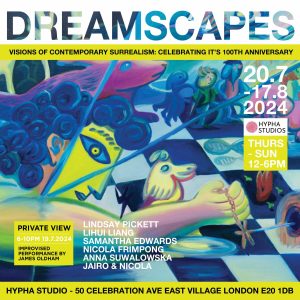 When I first encountered his work at the Dreamscapes exhibition by
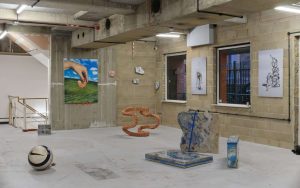 Through his paintings, Lindsay offers a space to reflect on what it means to live with unresolved emotions. His work does not aim to resolve or fix these contradictions but rather invites us to sit with them. Like the creatures that populate his canvases, some experiences—especially those involving loss—remain unchangeable, as reminders of what has been and cannot be undone. Yet within this darkness, Lindsay finds moments of beauty—whether in the elegance of a praying mantis or the strange allure of deep-sea creatures.
 1. Relief your stress and express yourself
 3. Cultivate mindfulness and cognitive flexibility
 5. Discover ways to cope with trauma and find a sense of purpose
 The Double as Empowerment and Destruction
 The Collapse of Thought
 It is the middle of the night. A dark limousine rides along Mulholland Drive carrying a mysterious woman (later known as Rita). Suddenly, the limo stops without explanation, and the driver pulls a gun on her. However, before anything happens, a car crash disrupts the situation, and Rita stumbles away, confused and suffering from amnesia.
  Daydreaming as a Defence Against Reality
 Phantasy as a Space for Emotional Truth
 Ever had that feeling where you’re telling a story, but no matter how many words or descriptions you use, something still feels lost in translation? It’s like describing the taste of chocolate to someone who’s never had a sweet in their life—it just doesn’t quite capture the full experience. In psychoanalysis, we often find ourselves in similar territory, where what’s left unsaid can be just as important as what is spoken. It’s in these unsaid spaces that the real work begins, where meaning hides beneath the surface, waiting to be discovered.
 Chomsky and Gaps in Language
 Saussure and the Gaps Created by the Arbitrary Nature of Signs
 The Gaps in Language and Unconscious Manifestation
 Humans are, at their core, speaking beings. Our capacity to communicate through language defines much of what it means to be human, shaping our relationships, culture, and sense of self. From the moment we learn to speak, we use language as the primary tool for expressing our thoughts, feelings, and desires. However, as much as language enables us to articulate our inner world, it also reveals what we struggle to say—or even what we cannot say at all.
 Psychoanalysis, Lacan, and the Linguistic Unconscious
 Conclusion
 Lacan’s Framework of Desire: The Objet Petit a
 Desire as a Constant Drive
 The Joy of Incompletion
 As we approach the centennial of the surrealist movement in 2024, it’s an opportune moment to reflect on one of its most profound influences: psychoanalysis. Since its formal establishment in 1924, surrealism has fascinated the world with its dreamlike depictions and exploration of the unconscious, deeply intertwined with psychoanalytic theory. The movement, led by André Breton, drew inspiration from the work of Sigmund Freud and others in the psychoanalytic field, offering a creative playground where dreams, symbols, and unconscious desires could be freely explored.
 Dreams and Symbolism: A Shared Language of the Unconscious
 Looking Forward: The Enduring Influence of Surrealism and Psychoanalysis
 The Definition of Dialogue
 Key Principles of Bohm Dialogue: