
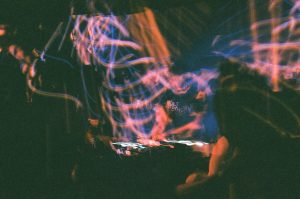
 A night out can become a suspension of the ordinary. It contrasts with the routines that structure daily life: work, study, and other obligations and demands. It offers a space where something other than the ordinary everyday may emerge, something unspoken, perhaps even unconscious. The music, the lights, and the movement of bodies create an atmosphere of excess, a pleasure that seems to extend beyond what is accepted in mundane lives. However, from a psychoanalytic perspective, this excess is never without structure. Even in apparent freedom, rules- sometimes unspoken but deeply felt- govern the experience.
At the heart of a night out is desire, that restless force that psychoanalysis tells us is never fully satisfied. Why do people go out? Is it to enjoy, forget, or lose themselves? Or is it to seek something just out of reach? The pleasure of dancing, of being surrounded by others, is tied to an expectation that something will happen, something will be different. The night holds a promise, though often undefined one.
Yet, within this pleasure, anxiety lingers. The psychoanalytic view of anxiety suggests that it is not simply about fear or discomfort; it arises at the point where desire and prohibition meet. A night out is structured by this tension. There is transgression, of limits, of norms, but within a contained space. A club or bar allows for rule-breaking in a sense, yet it is also governed by its own laws: social codes, the presence of bouncers, and the implicit expectations of how one should behave. One is free, but only within certain limits.
Excess Within Limits
There is something almost adolescent about the ritual of going out as if it repeats an early phantasy of liberation. In adolescence, becoming an adult is often imagined as escaping the parental gaze and finally being free to do as one wishes. But what is left unsaid is that this freedom is never absolute. The adolescent leaves the family home only to enter a different form of supervision, the ’authority’ of the nightclub, the expectations of a peer group, and the silent but ever-present influence of social norms.
Psychoanalysis reminds us that the Other, that great structuring force of language, law, and expectation, is never truly absent. Even in the most hedonistic environments, something or someone watches; something or someone structures the experience. The bouncer at the door, deciding who enters and who does not, embodies this authority. The DJ, setting the rhythm, dictates the night’s movements. Even the drink in hand serves as a kind of permission slip to relax and let go, but only to a certain extent. The nightclub is not a space of total freedom but of negotiated freedom, excess within limits.
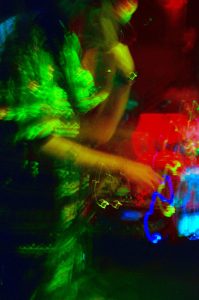 Dancing and the Body in Psychoanalysis
In a nightclub, speech fades. Words become secondary to movement and the rhythm of bodies in space. The speaking, the conversation, with its emphasis on articulation, is momentarily abandoned. People try to shout over the music and gesticulate to aid expression; some lip reading is happening, too. Instead, there is an emphasis on a different kind of expression- one that is physical, bodily, perhaps closer to the drives than to language itself.
Psychoanalysis has long concerned itself with the body- not the biological body, but the body as it is experienced, shaped by desire and the unconscious. The dancefloor becomes a space where the body breaks free from its usual constraints. The everyday body, defined by posture and gestures formed through habit and social expectation, yields to a body that moves differently and expresses something beyond conscious control. This is why dancing can feel liberating yet also strange. The pleasure of losing oneself in movement can be unsettling as if one is stepping into an unfamiliar version of oneself.
There is a sense of jouissance in this excess, a pleasure that pushes against its limits and is almost overwhelming. A night out flirts with this threshold. There is enjoyment, but also the possibility of going too far, tipping into something that ceases to be a pleasure and becomes something else. This is the delicate balance of the night, between control and surrender, between enjoyment and a sort of dissolution.
 The Return and the Aftermath
Every night out must come to an end. The music fades, the lights turn on, and the return to everyday life begins. The journey home is often accompanied by a quiet sense of loss. What felt so promising in the heat of the moment now seems distant, almost unreal. This transition from a space of excess to the structure of the ordinary reflects something fundamental about itself.
Desire, psychoanalysis tells us, is always in motion. It is never fully satisfied, and this is what keeps it alive. A night out operates in the same way. One goes out in search of something, and even if the night is enjoyable, it does not fully deliver. The next day, there is often the sense that something was missing, that the experience did not quite reach what was anticipated. And so, the cycle repeats; one goes out again, drawn back to the possibility that the night might offer something more next time.
Yet, something of the night lingers. The body carries traces of the experience: the tired muscles, the scent of sweat and smoke, and the vague recollections of conversations and moments shared. The unconscious, too, clings to these fragments. The desire for excess and transgression does not vanish with the rising sun. It remains, waiting for the next opportunity to emerge.
In this way, a night out is not merely an escape. It represents a negotiation with desire, prohibition, and the unconscious structures that shape our experience. It is a performance of freedom that is never entirely free, a ritual of pleasure always shadowed by its limits. Yet, within these constraints, something real is felt, if only for a moment, if only in the space between beats.
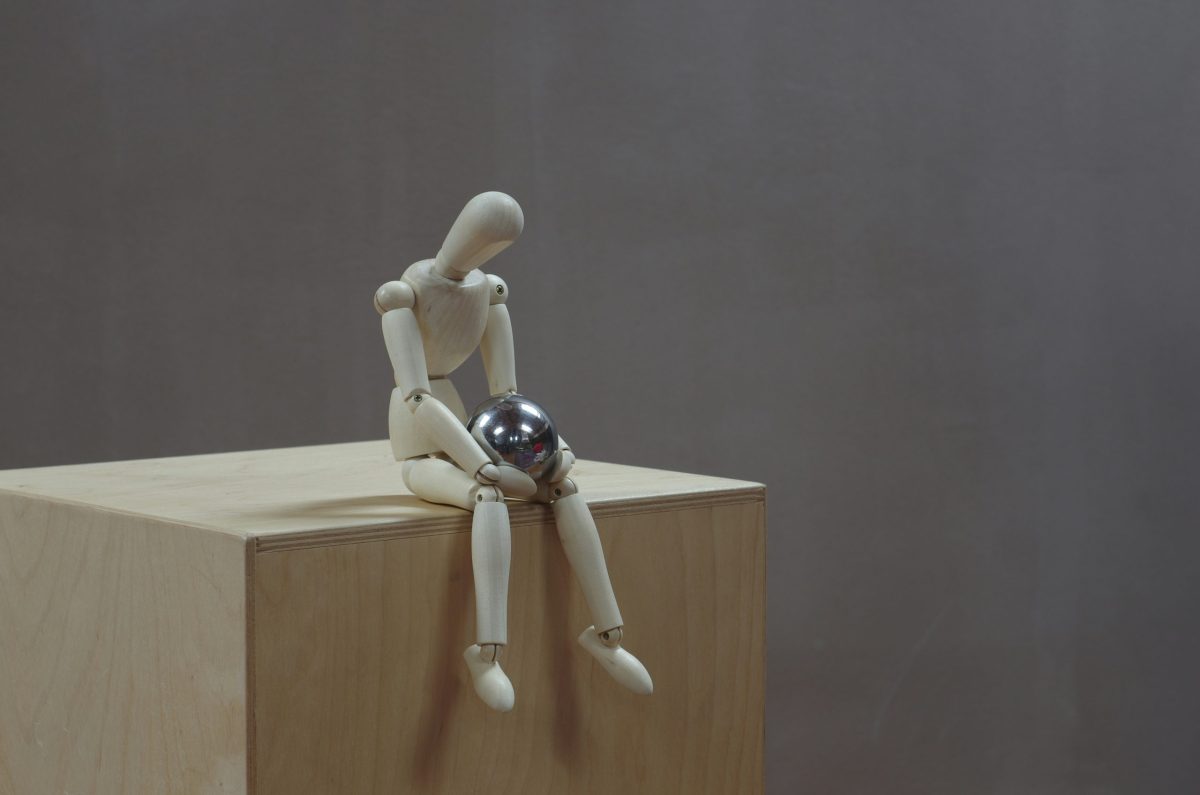
 Franz Kafka’s Odradek, that strange, inexplicable figure from The Cares of a Family Man, offers a compelling way to think about something many of us sense but struggle to name: the persistence of something within a family line, something that endures without clear reason, renewing itself in each generation. Kafka’s creation, a small, lifeless yet animate object that resists definition, has often been read as a figure of the uncanny. Freud’s essay The Uncanny provides a way of thinking about this sense of unease, something at once familiar and alien, something we cannot quite rid ourselves of. When applied to the family, Odradek becomes a way of thinking about transgenerational transmission, those unconscious inheritances that refuse to disappear.
 The Uncanny Return of the Past
 Breaking the Cycle, or Learning to Listen