Categories
Uncategorized

Movies Go To Psychoanalysis (Pt. 1)

What is psychoanalysis, and why would movies go there? Psychoanalysis is a form of talking therapy and a framework for ideas. It is composed of three interrelated strands: metapsychology, which is a body of theoretical hypotheses about the nature and structure of the mind, a model of psychological development, and a collection of psychotherapy techniques like dream analysis and free association. Psychoanalysis has also been an inspiration for some of the most famous and thought-provoking films ever made, from the subtle psychological exploration of Bergman’s films to the dark, twisted minds of Hitchcock’s characters.

Hitchcock, The Master of Suspense

Known for his suspenseful films, Alfred Hitchcock is widely regarded as one of the greatest directors of all time. Perhaps the most well-known aspect of his art is how he incorporated psychoanalytic themes into his pieces. His films, which are renowned for their complex narratives, tense moments, and psychological nuance, have had a profound effect on the film industry.

The psychological depth, intricate storyline, and innovative filmmaking techniques of these Hitchcock films continue to captivate audiences.

1958’s “Vertigo” is regarded as one of Hitchcock’s best films and a masterwork of psychological suspense. The main character of the movie is Scottie Ferguson, a former detective with acrophobia, or a fear of heights. His job is to follow Madeleine Elster, a mysterious woman who seems to be close to taking her own life. As Scottie becomes increasingly obsessed with Madeleine, she tragically dies in a fall. Many years later, Scottie meets Judy Barton, a woman who remarkably resembles Madeleine. He becomes convinced that Judy is Madeleine reincarnated and sets out to recreate their past relationship, leading to a dangerous obsession that threatens his sanity.

Scottie’s obsession with possessing and controlling Madeleine is explored in the film, along with the destructive power of obsession. Additionally, as Scottie’s understanding of what is happening becomes more warped, vertigo makes it harder to distinguish between reality and illusion. Hitchcock also skilfully manipulates the audience’s perception of events by using suggestion to great effect, which adds to the tension and unease. Not to mention, the film’s cinematography is amazing, especially when it comes to the use of vertigo sequences, and Bernard Herrmann’s eerie score greatly adds to the mood and impact of the picture.

Some consider Psycho, which came out in 1960, to be a suspense masterwork. This horror movie is a ground-breaking piece of art that revolutionised the genre. It demonstrated how horror can encompass so much more than just shock and graphic violence. Its exploration of intricate psychological themes, an iconic shower scene, and novel narrative techniques have cemented its place in cinematic history. The movie centres on Marion Crane, a secretary who steals money from her company. Fleeing at a remote motel, she encounters the enigmatic Norman Bates, the motel’s proprietor. As Marion’s stay progresses, she becomes increasingly unsettled by Norman’s strange behaviour and the eerie atmosphere of the motel. A startling turn of events exposes Norman’s actual nature, setting up a terrifying conclusion. To keep viewers on the edge of their seats, Hitchcock expertly combines suspenseful storytelling and shock tactics. A classic illustration of this is the scene in the shower, which blends sudden violence with a voyeuristic viewpoint. Along with examining themes of madness, obsession, and guilt, Psycho also explores the intricacies of the human psyche. These psychological depths are vividly and unsettlingly portrayed by the character of Norman Bates. The movie also has an unusual narrative structure because it gradually reveals important information and switches perspectives. This keeps the audience wondering and evokes a sense of unease. Finally, the use of shadows and cramped areas in the film’s cinematography adds to the eerie atmosphere. The famous soundtrack by Bernard Herrmann heightens the suspense and tension even more.
Bergman, The Explorer of the Soul

The films of Swedish filmmaker and screenwriter Ingmar Bergman are well known for their examination of existential themes, religious issues, and human psychology. The intricacies of relationships, mortality, and the pursuit of meaning in life are commonly explored in his films. Directors like Woody Allen, David Lynch, and Lars von Trier have all been greatly influenced by Bergman’s work. 

Among the most influential films of the 20th century, according to some, is The Seventh Seal (1957). The story follows a knight, portrayed by Max von Sydow, who is a disillusioned soldier returning from the Crusades. It is a gloomy, allegorical tale set during the Black Death. He encounters Death (played by Bengt Ekerot) and challenges him to a game of chess, hoping to delay his own death. The knight wonders about the purpose of life and the existence of God as he plays because he sees the misery and despair of those around him.

In a world destroyed by the plague, the film examines the meaning of life, death, and the search for purpose. The mediaeval world in which it is set offers a striking and significant context for the existential issues it poses. The image of Death and the knight playing chess represents humanity’s struggle against death and the unknown. It delves into religious themes such as God’s nature, faith, and doubt. The movie’s sombre and eerie atmosphere is further enhanced by the black and white cinematography.

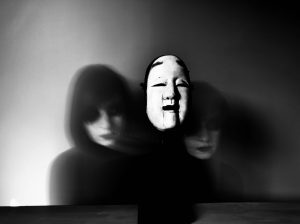
The 1966 film Persona is another one of Ingmar Bergman’s writing and directing credits. The film features Bibi Andersson and Liv Ullmann in a narrative about Alma, a nurse, taking care of Elisabet, a stage actress who has lost her voice. Identity, duality, and the relationship between the self and the other are among the themes that are explored in the movie. Stage actress Elisabet abruptly loses her voice during a performance, setting the scene for the movie. She is taken to a secluded island cottage for recovery, where she is attended to by a young nurse named Alma. As the two women spend time together, they begin to develop a strange and intimate relationship, blurring the lines between reality and illusion.

Numerous themes are covered in the movie, such as identity, duality, the nature of reality, and the self-other relationship. Different facets of the human psyche are represented by the characters Alma and Elisabet, who are thought to be reflections of one another. Numerous symbols can be found throughout the movie, including Elisabet’s masks and the double image that keeps appearing. The themes of identity and the disintegration of the self are explored through the use of these symbols. Additionally, it has been interpreted as a Freudian exploration of the unconscious mind. It is believed that the filmmaker’s own psyche is projected into the roles of Elisabet and Alma.

Some additional insights about Persona

  • The movie’s surreal and mysterious atmosphere was enhanced by the black and white photography.
  • The film is often mentioned as a precursor to postmodern cinema.
  • It has been seen in many different contexts, such as a feminist film, a film about the nature of art, or a film concerning the perils of delusion.

Other Notable Films Seemingly Influenced by Psychoanalysis

  • The Shining (1988), The Stephen King’s novel adapted by Stanley Kubrick. It is a terrifying look at loneliness, insanity, and the power of the mind.
  • David Fincher’s darkly comedic film Fight Club (1999) delves into themes of consumerism, masculinity, and the search for purpose in life.
  • The psychological thriller Black Swan (2010) by Darren Aronofsky delves into themes of obsession, perfectionism, and the shadowy side of the creative process.


 

Categories
Uncategorized

Albert Camus and Psychoanalysis. An Absurd Encounter

Philosopher and author Albert Camus, as well as psychoanalyst Sigmund Freud, were known as two original thinkers. Though seemingly disparate, their works intersect at intriguing points, offering a rich tapestry for exploration. This blog explores the possible links between the psychoanalytic lens and Camus’ absurdist philosophy.

 

The Absurd and the Unconscious


A key component of Camus’ philosophy is his notion of the absurd. According to his theory, life has no intrinsic meaning and no inherent purpose or value. This encounter with absurdity can result in a defiant affirmation of life despite its absurdity or in existential despair.

On the other hand, psychoanalysis delves into the depths of the human psyche to reveal the unconscious drives and desires that influence our actions. Theories of the id, ego, and superego by Freud, along with his notions of sublimation and repression, provide a framework for comprehending the psychological foundations of human experience.


The Myth of Sisyphus 


The famous essay by Camus, “The Myth of Sisyphus,” uses the metaphor of a man destined to roll a boulder up a hill for all eternity only to have it roll back down as a representation of the human condition. Camus sees a kind of defiance in Sisyphus’ acceptance of his fate, even though this Sisyphean task represents the absurdity of existence. To highlight the meaninglessness of life by nature, Camus presents the idea of the absurd. Sisyphus is the embodiment of this absurdity; he is doomed to push a boulder up a hill for all eternity only to have it roll back down. The task is futile, yet Sisyphus must continue. To quote Camus:  


“The absurd is the confrontation between the irrational and the desire for absolute meaning.”


The myth strikes a deep chord with the human experience of coming to terms with death’s inevitable conclusion and life’s meaninglessness. It forces us to face the absurdity of our existence and look for purpose in it. 


“The struggle itself towards the heights is enough to fill a man’s heart. One must imagine Sisyphus happy.”


Even though Sisyphus’s fate is bleak, Camus finds a way to accept it as a form of defiance. Sisyphus becomes a symbol of the human spirit, which never gives up even in the face of unfathomable adversity.


“The absurd man, who knows that his life is devoid of meaning, can find a meaning in the very act of recognizing that it is meaningless.”


According to Camus, accepting life’s absurdity is a liberating realisation rather than a reason for hopelessness. We can break free from the delusion of purpose and lead more genuine lives by accepting the meaninglessness of life.


“Hope is a betrayal of the absurd.”


The myth is a call to action, even though it paints a gloomy picture. Camus exhorts us to accept life’s absurdities and derive fulfilment from the small acts of creation, love, and existence.


“The essential point is that there is no meaning beyond human life. Man must create his own meaning.”


“The Myth of Sisyphus” is a significant work that challenges us to confront the existential questions of life and find meaning in the face of absurdity. Camus’s defiant affirmation of the human spirit continues to inspire and provoke thought.


Totem and Taboo


Published in 1913, Totem and Taboo is Sigmund Freud’s groundbreaking work. Offering a distinctive viewpoint on the beginnings of human civilisation, religion, and morality, it is regarded as a seminal text in the development of psychoanalysis.


Origins of Civilisation


According to Freud, the origin of human civilisation can be traced back to the resolution of the Oedipus complex, a universal psychological conflict in which a child harbours animosity towards their same-sex parent and desires their opposite. He suggests that the founding event of the human A totem, a symbolic representation of the deceased father, was established after society was reduced to the collective patricide of a primordial father. 


“Prehistoric man(…) is known to us through(…) monuments(…)implements (…) left behind legends, myths and fairytales”


Considered a basic social contract supporting civilisation, the incest prohibition—which Freud associated with the Oedipus complex—is enforced. Freud contends that internalising the father’s prohibitions forms the superego, or moral conscience. In his interpretation, religious rituals function to uphold social order and allay guilt by symbolically reenacting the primordial patricide. Freud investigates how social norms and the collective conscience are maintained by taboos.


“The super-ego is the heir to the Oedipus complex.”


By showing how unconscious conflicts and desires can be expressed through myths, rituals, and dreams, “Totem and Taboo” offers insights into the symbolic language of the unconscious. Although not stated directly, Freud’s theories in this book can be considered forerunners of Carl Jung’s theory of the collective unconscious, which is a shared storehouse of archetypal symbols. Anthropological research is used in Totem and Taboo to investigate the beginnings of cultural customs and beliefs.


“Civilisation is based on the renunciation of instinctual satisfactions.”


External and Internal Absurdity of Existence


 

A foundational idea of psychoanalytic theory is Freud’s Oedipus complex, which holds that young children subconsciously harbour animosity towards their same-sex parent and yearn for their opposite-sex parent. Despite its contentious nature—a topic I will not delve into now—this complex offers a framework for comprehending how personalities develop and how families function. Though they might not appear connected, these two ideas—the fight against meaninglessness (Sisyphus) and the intricate relationship between desire and conflict (Oedipus complex)—explore essential human experiences.


A fascinating line of inquiry lies at the intersection of Sigmund Freud’s psychoanalysis and Albert Camus’ philosophy of the absurd. While Camus emphasises the external absurdity of the world, Freud delves into the internal absurdity of the human psyche. We could better comprehend the human condition and our quest for meaning in an apparently meaningless world by combining these two points of view.


Categories
Uncategorized

The Anxiety Aestetic. Is Your Favourite Movie Character Anxious?

The ubiquitous and frequently crippling emotion of anxiety is a complicated phenomenon that has long fascinated scientists, philosophers, and psychologists. The symptoms of anxiety range from physical symptoms like rapid heartbeat, sweating, change in skin tone, trembling, shortness of breath, and muscle tension. Sometimes anxiety blurred vision may occur. Psychological symptoms of anxiety may include constant worry, seemingly irrational fears, anxiety panic attacks, catastrophic thinking, irritability, and social withdrawal. It is worth adding that those two lists are non-exhaustive, symptoms depend on the individual and the context.

From a psychoanalytic standpoint, anxiety is a signal emanating from the depths of our psyche, rather than just a symptom. The three levels of consciousness—the conscious, preconscious, and unconscious—that make up the topographic model of mental functioning are described by Sigmund Freud’s psychoanalytic theory. In this framework, anxiety often arises in the unconscious mind as a result of unresolved conflicts or the repressed. It can act as a warning sign, making us aware of possible internal and external dangers. Automatic anxiety and signal anxiety are the two categories that Freud distinguished. Automatic anxiety is the subject’s response each time he encounters a traumatic event; that is, each time he is faced with an influx of stimuli, whether internal or external, that he is unable to cope with. Automatic anxiety implies no prejudgment but reacting to stimuli from the environment that seem too much to handle. It is more of a primitive type. Although signal anxiety is the ego’s reaction to perceived threats, whether internal or external, it can also function as a warning signal. An interview for a job, for instance, may trigger signal anxiety. For example, it can spur someone to get ready for the interview, dress appropriately, and show up on time. On the other hand, signal anxiety might have the opposite effect and cause the person to either avoid the situation or somehow “sabotage” it. 

The Origins of Anxiety

Although certain life events can set off anxiety, psychoanalysts contend that early childhood experiences are frequently the source of anxiety. Anxiety patterns later in life may be rooted in an infant’s natural helplessness and reliance on carers. For instance, the fear of being abandoned can give rise to separation anxiety. These early anxieties can internalise as we mature and show up as a variety of adult anxiety disorders, including social anxiety disorder, performance anxiety, and generalised anxiety disorder.

Anxiety as a Defence Mechanism

It is noteworthy that anxiety can function as a protective mechanism as well. The mind may turn to anxiety to avoid dealing with these deeper issues when faced with overwhelming emotions or unacceptable desires. A person who is afraid of public speaking, for example, may be unintentionally avoiding the scrutiny and vulnerability that come with public speaking.

Beyond Symptom Management

Psychoanalysis attempts to address the underlying causes of anxiety, in contrast to many modern approaches that concentrate on symptom management. People can gain a better understanding of themselves and their behavioural patterns by exploring their unconscious. This self-discovery and re-discovery can lead to lasting changes and a greater sense of well-being.

Although psychoanalysis offers a valuable understanding of the nature of anxiety, it is important to keep in mind that there is no one-size-fits-all approach to treating anxiety. 


Cinematic Anxiety: Revealing the Monster

Movies have a unique ability to transport us into the minds and lives of others. In doing so, they often offer a powerful lens through which to examine complex human emotions like anxiety. Let’s look at some well-known cinematic depictions that have contributed to a greater understanding of this sometimes misconstrued mental health issue.


As a well-mannered man struggling with overwhelming anxiety, Adam Sandler gives a surprisingly nuanced performance in Punch-Drunk Love. The movie does a fantastic job of capturing the physical aspects of anxiety, such as shaking and fast breathing, as well as the overpowering feeling of loneliness.


Although the main subject of the movie Silver Linings Playbook is bipolar disorder, Bradley Cooper’s character also provides a moving representation of anxiety. His agitated state and obsessive-compulsive behaviours serve as a clear reminder of the difficulties experienced by individuals with anxiety.


Although Mark Zuckerberg’s persona in The Social Network is frequently portrayed as cold and calculating, there is a deep-seated fear of failure and rejection underneath the surface. The movie raises the possibility that his unwavering drive for achievement was fuelled by social anxiety.


The anonymous office worker played by Edward Norton in the movie Fight Club is overcome with a feeling of emptiness and unhappiness. His destructive coping mechanism is the alter ego he created out of anxiety.


In Black Swan, intense performance anxiety drives Natalie Portman’s character through a psychological metamorphosis. The movie looks at the darker side of ambition and the extremes people will go to in order to succeed.

Literary Characters as Anxiety’s Protagonists
There is a vast array of literary characters that face anxiety in various ways. Examining the lives of a few of these complex individuals, let us see how their experiences help us understand the nuances of various phenomena.


Holden Caulfield, the Overwhelmed Intellectual in The Catcher in the Rye

Adolescent anxiety is typified by J.D. Salinger’s enduring anti-hero, Holden Caulfield. Stressed minds are characterised by feelings of alienation, a fear of appearing fake, and an unending quest for genuineness. Holden perceives his anxiety as a barrier that keeps the overwhelming and corrupt world outside of him.


Winston Smith, The Paralysed Protagonist (1984)

The protagonist of George Orwell’s dystopian masterpiece, Winston Smith, suffers from anxiety and uncertainty. Being in a totalitarian state causes Winston constant anxiety because it is a constant threat. The deeper worries of a surveillance society are reflected in his internal conflicts.


The Socially Anxious Antihero Leonard (The Big Lebowski)

Although The Dude, or Leonard, from the Coen brothers’ cult classic movie, may not come across as nervous, beneath his laid-back exterior is a deep-seated fear of social interaction and confrontation. His need for calm and tranquillity serves as a defence mechanism against the chaos of the outside world.


Ophelia, the Creative Soul in Crisis (Hamlet)

Shakespeare’s Ophelia is a tragic figure whose environmental pressures are frequently blamed for her spiral into madness. Her unfulfilled love, cultural norms, and the sad circumstances involving her family are the causes of her anxiety. Her persona is a potent reminder of the destructive nature of mental anguish.


Categories
Uncategorized

The Primal scream. Bourgeois and the Unconscious

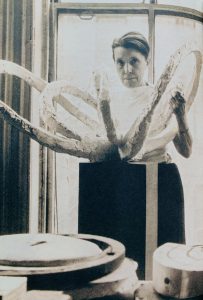
Renowned for her honest and unvarnished examination of the human psyche, Louise Bourgeois was a titan of the 20th-century art scene. As Donald Kuspit says in his essay about Bourgeois: “She was one of the great articulators of the core problems of modernity: psychic survival.” Her creation(s) is proof of the ability of art to be a working-through medium; it is frequently distinguished by its visceral intensity and symbolic depth.
 

A Window into the Soul

Bourgeois used her art as a direct way to deal with her inner demons. Her childhood, marked by her father’s infidelity and her mother’s unwavering loyalty, cast a long shadow over her life. These experiences provided her with fertile ground from which she produced some of her most potent works.

Psychoanalysis became a cornerstone of Bourgeois’ life. While she engaged with the process for many years, she was also a staunch critic of its limitations, particularly for artists. She believed art offered a more direct and unfiltered path to the unconscious. Nevertheless, she remained in psychoanalysis for over 30 years. 

Louise wrote in her diary in 1952, while she was undergoing intense analysis:

“I do not have to live in an empty world/world of vacuum (Marie Bonaparte) I can create/my own, artist world of omnipotence + fantasy/I have control space between I cannot/stand emptiness/emptiness is a space the edge of which you do/not know and you are not sure of-like falling/into space or like being dizzy. This question of space is perhaps sim/ply to have had fear of falling.”


Art as Catharsis

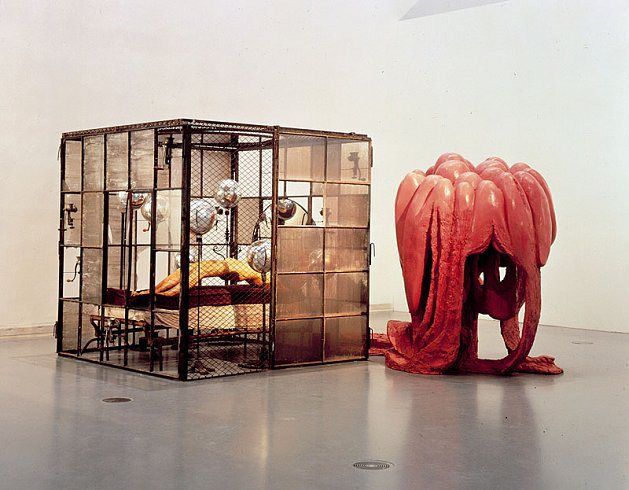
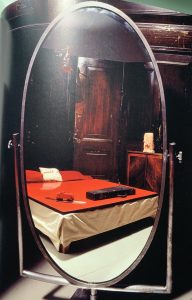
Red Room (Parents) (detail) 1994

Bourgeois saw art as a form of catharsis, a way to exorcise the pain and trauma that haunted her. Her work is a testament to the idea that art can be a powerful tool for healing and transformation.

By giving form to her inner turmoil, Bourgeois invited viewers into her world, encouraging thinking. Her work challenged societal norms and taboos, particularly around female sexuality and experience.

For example, her famous spider sculptures are frequently thought of as maternal figures. They do, also have undertones of control, fear, and protection. The physicality of the sculptures gives tangible form to these complex emotions that are so deeply ingrained in her personal history.

In 1992 Louise wrote:

“ The work of art is limited to an acting out, not an understanding. If we were understood, the need to do the work would not exist anymore… Art is a guaranty of sanity but not liberation. It comes back again and again.


A Daughter’s Trauma and Artistic Catharsis

Louise Bourgeois’ relationship with her father was a complex and deeply traumatic one that profoundly influenced her art. Her father’s infidelity, which she discovered as a child, cast a long shadow over her life and became a central theme in her work.

Bourgeois often described her mother as a steadfast and protective figure who stood by her during this tumultuous time. In contrast, her father was an absent and often cruel figure. This dynamic created a profound sense of betrayal and insecurity that she carried with her throughout her life.

Her art became a powerful tool for processing and understanding this complex emotional landscape. Through her sculptures, paintings, and installations, she explored themes of abandonment, betrayal, and loss. The iconic spider, a recurring motif in her work, is often interpreted as a maternal figure, offering protection and support, perhaps a reflection of the maternal strength she found in her mother. Yet, the spider also carries undercurrents of fear and control, suggesting the complex and ambivalent feelings she harboured towards both parents.

The enduring impact of childhood trauma is demonstrated by Bourgeois’s work. Giving expression to her hurt and rage allowed her to not only deal with her personal suffering but also to produce art that spoke to a great number of people who had gone through similar traumas. Through the examination of the deepest recesses of the human psyche, her work offers a route to understanding and healing, serving as a reminder of the transformative power of art.

Louise wrote in her diary in 1952:

“Children show off for sympathy. My father showed his troubles, he showed off his troubles for sympathy. His asking for reassurance was asking for pity. After that, after showing himself shamefully and uselessly (because people do not show you sympathy) (…) He felt hurt and exposed and shrivelled up like a caterpillar. He was torn apart by his need to expose himself in an attempt to be loved and his modesty and fit of rage hate at having been seen. People want to pry on me, I have no privacy, nobody knew where he lived (literally). His running away was a desire to be found and run after.”


The Destruction of the Father Art Work

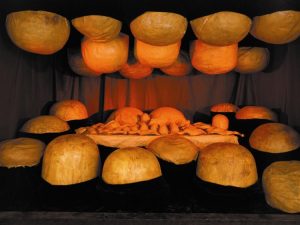
“The Destruction of the Father,” a powerful and visceral examination of Louise Bourgeois’s complicated relationship with her father, was published in 1974. Her rage, bitterness, and desire for vengeance are clearly depicted in this piece. Plaster, fabric, wood, and metal are among the disorganised materials that come together to form a hideous, broken figure. By deconstructing the paternal authority figure symbolically, this work releases the pain and betrayal she felt in a cathartic way.

Louise wrote in 1965

“I am ready/I have everything the/circumstances ask of me/therefore, I can fall asleep/I have an answer to everything/it is not only a right/it is a need, an obsession/I am not my father/I am defined by what I do not know/I may not know what I am but I know what I am not.”


The Spider: Maternal Protector. Controlling Force

Bourgeois’ iconic spider sculptures, often referred to as “Maman,” are perhaps the most recognizable and enigmatic works in her oeuvre. These monumental figures, characterized by their imposing size and intricate web-like structures, have been interpreted in various ways.
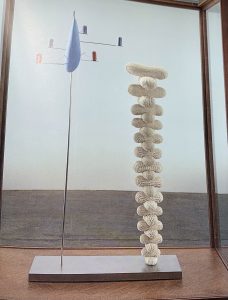
On the one hand, the spider is frequently associated with motherhood and is thought to symbolise creation, nurturing, and protection. This interpretation is reasonable considering Bourgeois’s close relationship with her mother. Maternal care is evoked by the spider’s protective posture and its complex web, which is symbolic of life and nourishment.

But there are also darker meanings associated with the spider. Its eight legs can be interpreted as symbols of dominance and control, representing the complicated and frequently conflicted emotions Bourgeois felt towards her father and other authority figures. Although the web is a symbol of creation, it can also be seen as a trap, implying a sense of limitation and entrapment.

It is crucial to keep in mind that Bourgeois’s artwork frequently has layers and is interpreted in a variety of ways. Like many of her creations, the spider is a nuanced and multidimensional symbol that encourages viewers to consider their own feelings and associations.

Through an analysis of pieces such as “The Destruction of the Father” and the spider sculptures, we are able to comprehend the profound influence that Bourgeois’s father had on her life and art. She is a living example of the resilience and creative potential of the human spirit, having been able to transform personal trauma into powerful and timeless pieces of art.

Conscious of Unconscious Sculpture (2008)

Louise’s last diary entry from 2008

“Never let me be free from/this burden that will never/let me be free”