
The poem ‘Return to Tipasa’ by Albert Camus resonates with an experience that psychoanalysis encounters time and again: the co-existance and tension of opposites like hate and love, tears and smiles, chaos and calm.
“In the depth of hate, I found there was, within me, an invincible love.
In the depth of tears, I found there was, within me, an invincible smile.
In the depth of chaos, I found there was, within me, an invincible calm.
In the depth of winter, I found there was, within me, an invincible summer.”
“Albert Camus “Return to Tipasa”
Albert Camus’ words in Return to Tipasa—“In the depth of hate, I found there was, within me, an invincible love”—resonate with an experience that psychoanalysis encounters time and again. What are we to make of this “invincible” presence within? Camus gestures towards something irreducible, something that persists beyond the dialectic of suffering and joy. A Lacanian reading invites us to consider this as the trace of the Real—that which resists symbolisation yet insists in the subject’s (2) life.

Camus’ lines suggest a structure, a kind of doubling: hate and love, tears and a smile, chaos and calm, winter and summer. These are not simple opposites, nor are they neatly reconciled; rather, they co-exist, producing tension within the subject. For Lacan, such a structure recalls the way the subject is caught between registers(1)—the Symbolic, the Imaginary, and the Real—where each order plays its part in the constitution of experience. Camus’ words thus offer a way of thinking about how, beneath the conscious experience of despair or turmoil, there persists something unyielding, a kernel of jouissance (3) that refuses to be fully subsumed by the signifier.
The Dialectic of Hate and Love
“In the depth of hate, I found there was, within me, an invincible love.”
Hate and love are frequently understood as opposites, yet Lacan’s teaching reveals their entanglement. Love, in a psychoanalytic sense, is never a pure force but is bound up with a lack, an incompleteness in the subject. The love that Camus discovers in the depth of hate is not necessarily an antidote to it, but rather its double, revealing how the subject is always structured around desire and lack.
Lacan often reminded us that love involves a fundamental misrecognition: “To love is to give what one does not have to someone who does not want it.” The subject in love seeks something in the other that will fill an absence, a structural incompleteness within themselves. Hate, too, is shaped by this absence—it is not mere rejection but a relation that binds the subject to the object of hate as much as love does.
In the clinic, one sees this most acutely in the transference, where a patient’s intense hostility towards the analyst is often a manifestation of unconscious love, or at least of a profound libidinal investment. The hatred can be read as a defence against the terror of desire, against the vulnerability that love exposes. If we follow Camus’ formulation, then hate carries within it a trace of the love it resists—an insight that resonates with Lacan’s claim that “there is no such thing as a relationship that is not marked by ambivalence.”

The Smile Beneath the Tears
“In the depth of tears, I found there was, within me, an invincible smile.”
To cry is to encounter a limit—the body breaks under affect, language falters. Yet within this breaking, Camus suggests, there is something invincible: the smile that persists beneath the tears. This recalls Lacan’s discussion of jouissance, a term that defies easy translation but connotes an excessive, paradoxical enjoyment, one that can be bound up with suffering itself.
One might think here of Freud’s Beyond the Pleasure Principle, where the compulsion to repeat painful experiences suggests that suffering itself may be a site of jouissance. In the Lacanian frame, this is the enjoyment that attaches itself to the symptom, the opaque satisfaction that keeps suffering in place. The “invincible smile” in Camus’ phrase could thus be read as an echo of this persistent jouissance, which remains even in the most sorrowful of states.
Chaos and the Desire for Order
“In the depth of chaos, I found there was, within me, an invincible calm.”
Chaos, in the psychoanalytic sense, is not merely disorder but something more radical: the eruption of the Real. It is that which cannot be fully symbolised, the gaps and ruptures in meaning that the subject encounters in moments of crisis. Psychoanalysis does not seek to impose order upon this chaos, as much as modern psychology might tempt one to do. Rather, it acknowledges that the subject’s attempts to find meaning are always incomplete, always haunted by a remainder that resists integration.
Camus’ “invincible calm” might then be understood as something akin to what Lacan called the sinthome—a way in which the subject stabilises their relationship to the Real. It is not a resolution of chaos but a way of bearing it, a mode of existence that allows for the persistence of the subject despite the fundamental contingency of their being.

The Real of Summer in the Heart of Winter
“In the depth of winter, I found there was, within me, an invincible summer.”
Perhaps the most evocative of Camus’ formulations, this final image suggests something that outlasts the cycles of time, something enduring within the subject. Lacan spoke of the Real as that which is always there, beneath the fluctuations of the Symbolic and Imaginary. It does not develop or change but insists, returning again and again in different guises.
This “invincible summer” could be seen as akin to the ‘lalangue’—the pre-symbolic residue of language, the echoes of one’s earliest encounters with words and affects that remain lodged in the unconscious. It is a form of knowledge that is not intellectual but affective, and bodily. It persists even when the subject is plunged into crisis when the structures that sustain meaning collapse.
The Ethics of the Invincible
Camus’ reflections in Return to Tipasa offer us a poetic formulation of what Lacan conceptualised in more technical terms: the persistence of the Real, the paradoxical structure of desire, and the fundamental tension within the subject. His “invincible” forces—love, the smile, calm, summer—do not erase their counterparts but exist alongside them, revealing the way the subject is always divided, caught in an interplay of presence and absence.
Psychoanalysis does not promise to reconcile these tensions. Instead, it offers a way of working with them, of recognising how the subject is structured by lack and by what remains beyond meaning. Camus’ vision, like Lacan’s, is not one of harmony but of endurance. To find within winter an invincible summer is not to deny winter but to acknowledge that, even at the limits of despair, something persists.
In the end, psychoanalysis is less about curing the subject than about opening a space for them to encounter their own invincible core—not a self-contained essence, but the Real that insists, that shapes desire, and that remains beyond the grasp of language. Perhaps this is what Camus was reaching for—a recognition that, in the heart of suffering, something endures, something that resists erasure. And in that, there is life.
Notes
Registers: Real, Imaginary, Symbolic
The Real-That which resists symbolisation and cannot be fully grasped in language. It is what remains beyond meaning, often appearing in moments of rupture, trauma, or profound encounters with the limits of existence.
The Imaginary- The register of images, illusions, and identifications. It is closely linked to the ego and the way we ‘misrecognise’ ourselves and others, shaped by early experiences such as the mirror stage.
The Symbolic-The realm of language, law, and social structures. It organises meaning, placing the subject within the network of signifiers that determine their identity and relationships.
Subject
Used here instead of ‘a person,’ ‘a patient,’ or ‘an individual.’ The subject in Lacanian psychoanalysis is not a self-contained individual but a divided being, structured by language and lack. The subject is always caught between what they desire, what is expected of them, and what remains inaccessible to them in the Real.
Jouissance
A complex term that refers to an excessive form of enjoyment that goes beyond pleasure and can involve suffering. Unlike ordinary pleasure, which is regulated by social norms, jouissance can be transgressive, painful, and disruptive, linked to the subject’s unconscious repetitions and symptoms.
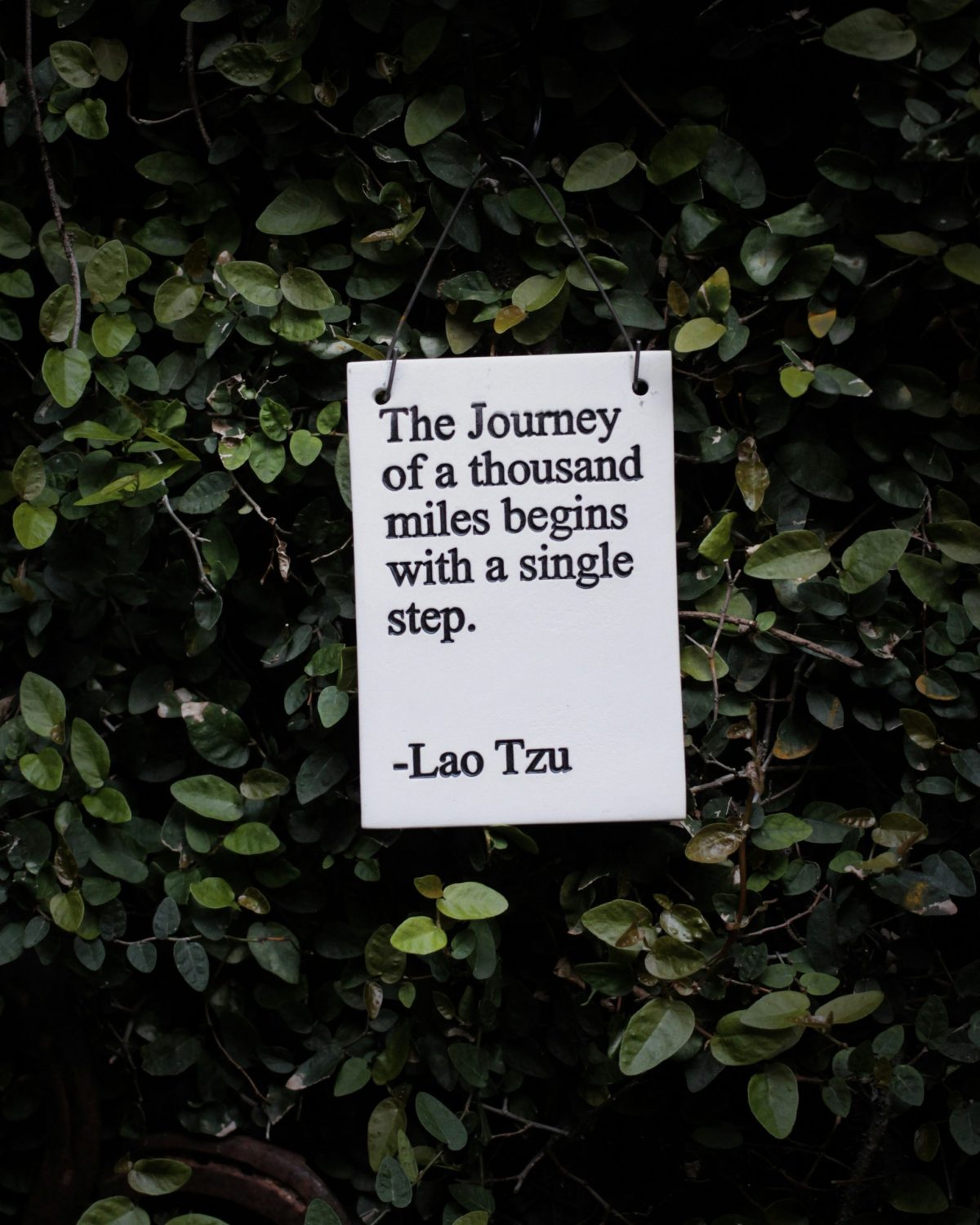
 As the new year begins, many of us feel the pull of fresh possibilities—a sense of starting anew, leaving behind what no longer serves, and opening ourselves to what might emerge. Yet, what does it truly mean to encounter the new? Within psychoanalysis, the concept of newness is far from superficial; it is not about resolutions or reinvention in the ordinary sense. Instead, it involves a profound process of becoming. By weaving together insights from Lacan, Winnicott, and Bion, we might reflect on how psychoanalysis can illuminate the nature of newness as we step into the year ahead.
 Bion and the Face of the Unknown
 Newness in the New Year, a Psychoanalytic Convergence